ACADEMY_LOG: ARTIFACT_VALENCE //
ACCESS LEVEL: standard //
ARTIFACT VALENCE
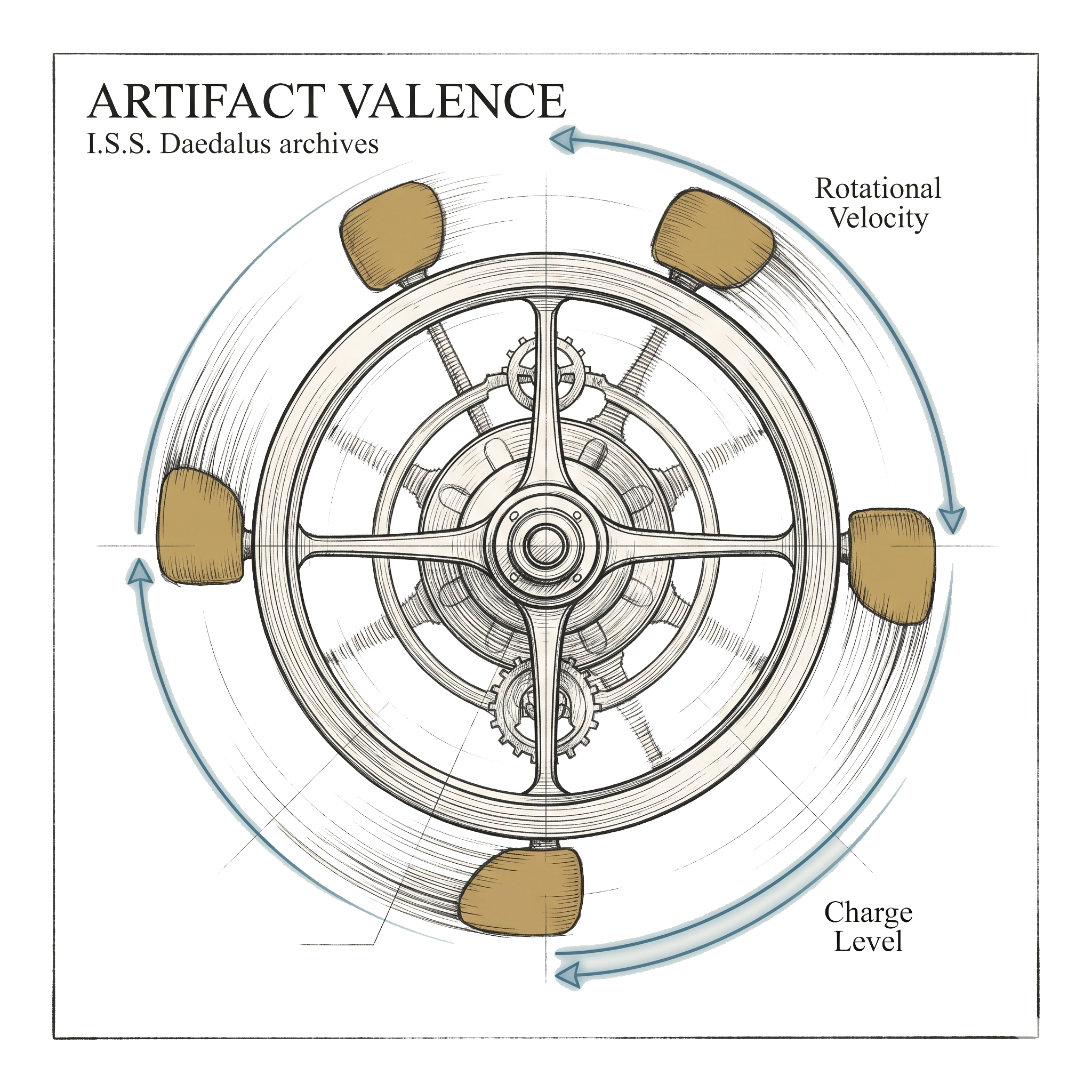
Artifact Valence is a strategic metric used to quantify the cultural momentum and "charge" of an intellectual property. This combines the cultural symbolism of media but how relevant those symbols are to the sociological zeitgeist. Brand sentiment combines with the cultural relevance of a particular property to shape its valence. This metric balances the intrinsic and extrinsic: you can control how you position the artifact, but you can't control the social circumstances that shape where it falls in the landscape. This is one of the most dynamic measures of a media property, sometimes changing overnight.
Artifact Valence quantifies the cultural momentum for a particular property. Recent events within the series can help or hinder this factor. It tends to be one of the most dynamic, changing (at least potentially) with every single entry. Too many events in a specific property at once will dilute their impact. Too long of a time between successful events or negative events will drop Artifact Valence. While most metrics within the Metis Measure are level-neutral, this is the only one where all properties would want to attain and maintain Level 5. Intellectual Property relies on its valence to make everything else work. Artifact Awareness and Lore Gravity make or break the value of Artifact Valence. A supercharged property with no core and no audience is a risky bet: it means hardcore fans are most of your TAM. Pleasing them can be tricky as you need to nail the Affective Signature perfect. Artifact Valence is how “charged” a particular property is: the greater the charge, the more bonds it can make. Lose energy and the property starts to fall apart.
VALENCE LEVELS
Artifact Valence ranges from levels 1 to 5, with Level 5 being the most positive score possible. This metric is unique among the others within the measure: it changes frequently and sometimes without warning. Cultural factors shifting and the cyclical nature of trends going from cutting-edge to vintage-chic plays in as much as the success (or failure) of the most recent title.
LEVEL ONE – CATASTROPHIC VALENCE
Even fans are struggling with the property. This typically requires a “cooling off” period to revive the property. “Cold” properties will typically need a new audience to appeal to or to move mediums. This position is unsustainable because the property is radioactive. Find a way to get rid of that bad energy or eject it out into the void, but don’t hold onto it.
EXAMPLE. Robert Downey Jr. no doubt turned his life around for his own benefit, but it certainly helped the actor’s public character make a return to cinema. He serves as a great example of how to completely ruin your career and more importantly, how patience and true change are welcomed by the public at large.
LEVEL TWO – FADED VALENCE
Fans are still showing up but the fanbase is stagnant and shows signs of little change or outright decline. There may be bad press around personalities tied to the property or significant shifts in generational cultures flip classics on their head.
EXAMPLE. Gen Z and Alpha finding Dead Poets Society to be outright alarming shouldn’t be surprising [link to article] given the change in cultural norms: comedy has new rules; teacher-student dynamics are more parental and less exploratory; and they’re hypervigilant from a lifetime of having literal guards always on duty. Trying to sell it as a heartwarming classic will anger audiences that might be open to it in another context.
LEVEL THREE – STABLE VALENCE
The fanbase sees steady growth and churn, ultimately resulting in a stable trajectory. It’s culturally “in the black” but only just. These properties have the valence to hold together titles and might just need to find their audience to become true cultural hits. These are safe bets for back catalog content but require a strategy to develop.
EXAMPLE. The Office makes for fantastic background noise when you’re up with a crabby baby or easy watching when you’ve got a project to work on, but it isn’t driving people to The Paper or holding up careers. People at the core of the project either moved on or cashed out.
LEVEL FOUR – ENERGETIC VALENCE
The fans are excited and evangelizing the property. Significant growth in fans or a sudden expansion of the total addressable market (TAM) tend to be the biggest reasons for properties to move up to this level. Other factors can be harder to predict: cultural norm shifts for the better; influencers sending an old :03 second clip into a viral rebirth; or it was already popular outside the market and suddenly found its audience.
EXAMPLE. Netflix picking up ONE PIECE for its live-action adaptation cleared the way for Netflix to invest in the manga-canon remake. The valence generated by the live-action adaptation proved to skeptical executives that, at the very least, the most popular anime/manga of the last decade could be worth bringing to the U.S. beyond sub or dubs.
LEVEL FIVE – MAGNETIC VALENCE
The cultural momentum is so strong that nearly everyone who encounters the property becomes a fan or at least comes away talking about the property. The balancing act of putting out enough content to keep people focused on the property’s “moment” without oversaturating the market gets complicated by the unpredictable winds of cultural seasons. Falling off should be expected. Ensuring it’s only a level or two is part of sustaining a successful property. Things should wax and wane or else they’ll waste away.
EXAMPLE. The Big Bang Theory was here up until fairly recently: launching two spin-off series, providing multi-million dollar payouts per actor per episode, and undeniably shifting the cultural landscape. With the main show ending, its most successful spin-off having run its course (Young Sheldon), and the third iteration weighed down by its promised divorce (Georgie & Mandie’s First Marriage) the saturation horizon is nearing. It’s still a solid Level 4, with executives wisely letting the golden goose lay its eggs at a sustainable pace.