ACADEMY_LOG: CANON_MUTABILITY //
ACCESS LEVEL: standard //
CANON MUTABILITY
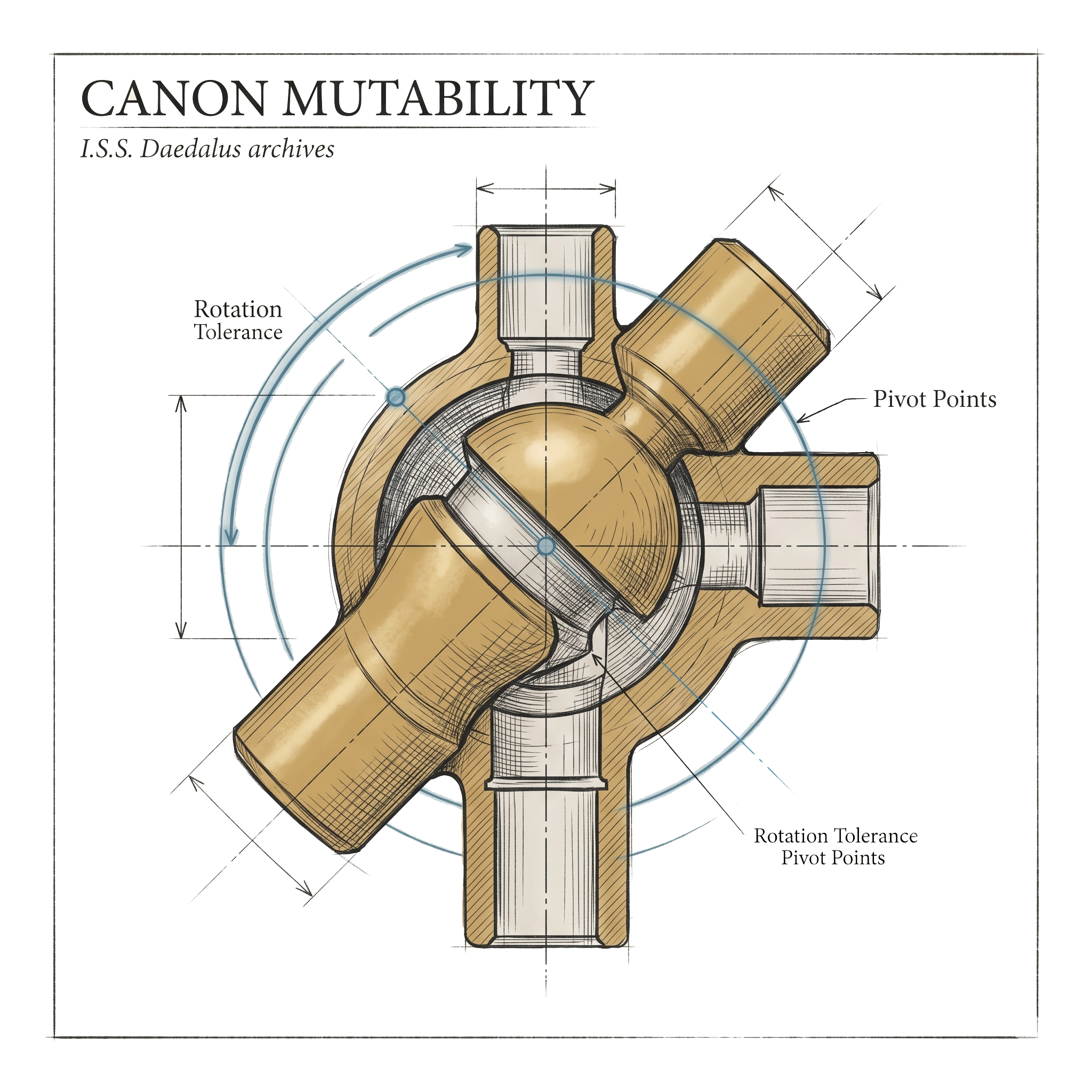
Canon Mutability is a strategic metric used to quantify the structural flexibility of intellectual properties. Discover how character rigidity and narrative elasticity determine adaptation success, fan sentiment, and long-term IP viability. High and low mutability offer different strengths: a stronger canon has deeper draw while flexible stories allow teams more opportunity to surprise and delight audiences.
Canon Mutability quantifies how important how important the specific characters, events, and storylines are to the property’s central identity. Properties with high canon mutability are open to being adapted and run low risk of alienating fans for changing the story. Low canon mutability makes for an easier project (stick to the script) but runs greater risks of alienating hardcore fan audiences. Canon Mutability is especially important to consider in conjunction with the world in which the story takes place (Lore Gravity) and the medium through which it's told (Medium Tethering) come together to anchor an IP.
MUTABILITY LEVELS
Canon Mutability ranges from a score of 1 to 5, with 5 being the highest degree of mutability. Canon Mutability tends to increase with the age of an intellectual property. Some legacy properties (esp. cultural relics) have incredibly low mutability despite their age. High or low scores are not inherently better or worse but they have distinct advantages/disadvantages to consider:
LEVEL ONE - IMMUTABLE CANON
The story is the heart of the IP. You can change the setting, you can change the way you tell it, but you absolutely cannot change the story. You could even get away with changing the world as long as you keep the story elements.
Example: Romeo and Juliet can be set in the modern day, an alternate universe, or its original context with anyone playing any role as long as Romeo and Juliet are here, in love, and tragically doomed. The story is the IP.
LEVEL TWO – LIMITED MUTABILITY
The characters are especially important and their roles in the story are key to the audience’s identification of the IP as part of the greater property. The specific events should stay the same but a beat-for-beat replay is unnecessary.
Example: Hoodwinked! grossed $110M on an $8M budget by taking Little Red Riding Hood and changing everything except the core canon. Rare example of a level 2 property being totally transformed but still succeeding. Also accounts for why the sequel didn’t; they had to leave behind the canon and it flopped.
LEVEL THREE – STANDARD MUTABILITY
The story and its characters should be consistent with the original property, but don’t need to directly match across canon. Sequels often require this kind of mutability to be successful within their own property.
Example: Avengers has a lower mutability than Guardians of the Galaxy fits right in at Level 3: keep the story going between sequels, change up the characters' roles, expand their development. Tony Stark and team, however, must always be Tony Stark and team.
LEVEL FOUR – ANTICIPATED MUTABILITY
The IP is built around its canon mutability or has frequently changed its own story. Characters and Lore Gravity tend to be more important in linking these properties than any specific story or story beats. Audiences want some changes between iterations.
Example: Spider-man is one of the Marvel properties able to continually reject its canon while drawing in fans and fresh audiences. Allowing “Spider-man” to be as iterative across other media as he is in the comics has become a brand pillar for the ever-expanding multiverse project.
LEVEL FIVE – ESSENTIAL MUTABILITY
The IP requires the canon to be mutable. There is no main storyline or the main story is a sample of how to use the world (Lore Gravity) to generate stories. Characters exist more as concepts or roles than specific identities or interactions.
Example: Dungeons & Dragons is one of many tabletop games where every iteration is meant to be unique. Honor Among Thieves didn’t crush in box offices for its budget ($208M on $150M) but it was the first well-received attempt at bringing D&D to the mainstream. 91% on Rotten Tomatoes gives a successful formula for keeping hardcore fans and newcomers both happy.